
Next.js vs Remix for SaaS: How to Choose the Right Framework
Choosing between Next.js and Remix for a new SaaS application? This comprehensive guide compares performance, data-fetching models, deployment options, and developer velocity to help you make the right choice.
Published on September 10, 2026 · Updated on September 10, 2026
To choose between Next.js and Remix for a new SaaS, pick Next.js if you need a hybrid of static and dynamic pages with a massive hiring pool, or choose Remix if you require dynamic, server-first data flows with native web standards. Next.js dominates the market with a 78% market share, while Remix holds steady at 8% according to the State of JS 2025 [1]. This massive adoption gap makes Next.js the safer default for most startups due to its larger ecosystem and extensive developer pool [1]. However, both frameworks excel under different conditions. Remix ships with smaller default JavaScript bundles of 60 to 90KB compared to Next.js's default of 80 to 120KB by pushing fetching logic to the server [2]. Yet, in 2026 benchmarks, Next.js 15.2 and Remix 3.1 sit within 10 to 15ms of each other across all Core Web Vitals on identical infrastructure [3]. If you are looking to build a high-performance web application, you can check out our related articles on modern web architecture, or learn more About AppBrewers to see how our team helps founders launch ideas in weeks. ## Next.js vs Remix: Performance and Bundle Sizes Performance is often the first battleground when comparing modern React frameworks. Remix achieves smaller client-side bundles by pushing data-fetching logic entirely to the server and relying on native browser APIs, whereas Next.js requires more careful optimization of Client versus Server Components [2]. This architectural difference allows Remix to ship with default JavaScript bundles of 60 to 90KB, while Next.js default bundles hover between 80 to 120KB [2]. Despite the difference in bundle sizes, raw performance on modern networks is incredibly close. In 2026 benchmarks, Next.js 15.2 and Remix 3.1 sit within 10 to 15ms of each other across all Core Web Vitals, including Largest Contentful Paint (LCP) and Interaction to Next Paint (INP), on identical infrastructure [3]. Recent framework updates, such as Next.js 15.2's React 19 concurrent scheduler and Remix 3.1's single-fetch revalidation, have effectively neutralized the performance gap between the two [3].  ## Data Fetching and Routing: Unified Patterns vs RSC The developer experience of building a SaaS depends heavily on how the framework handles routing and data flow. Remix uses a unified loader and action pattern for data fetching and mutations, whereas Next.js App Router relies on React Server Components (RSC) and Server Actions [4]. Remix's loader pattern is simpler and more predictable for form-heavy CRUD applications, while Next.js's RSC allows for highly flexible component-level data co-location [4]. Routing architectures also diverge significantly: - Remix routing: Remix uses nested routing where every route file acts as both a UI slice and a data boundary by default [7]. This default nested routing allows it to handle errors and loading states more gracefully at the component level without breaking the rest of the page [7].
- Next.js routing: Next.js App Router uses a folder-based routing structure with optional nested layouts [7].js folder-based routing versus Remix nested routing and data boundaries](:infographic:) ## Rendering Models and Platform Lock-in For SaaS startups, how pages are rendered and where they are hosted can impact both server costs and user experience. - Hybrid rendering: Next.js supports a hybrid rendering model including Server-Side Rendering (SSR), Static Site Generation (SSG), and Incremental Static Regeneration (ISR) [5]. This makes Next.js highly effective for SaaS platforms that require a mix of static marketing pages and dynamic dashboards [5].
- Server-first rendering: Remix focuses primarily on a server-first, dynamic SSR approach [5]. This architecture is optimized for highly dynamic, real-time user flows where static caching is less relevant [5].
- Deployment flexibility: Remix is runtime-agnostic and deploys seamlessly to any JavaScript runtime, including Cloudflare Workers, Deno, and Node.js [6]. Next.js is heavily optimized for Vercel's platform [6]. SaaS founders looking to avoid vendor lock-in or wanting to deploy on edge-first platforms like Cloudflare often favor Remix's native web-standards architecture [6].
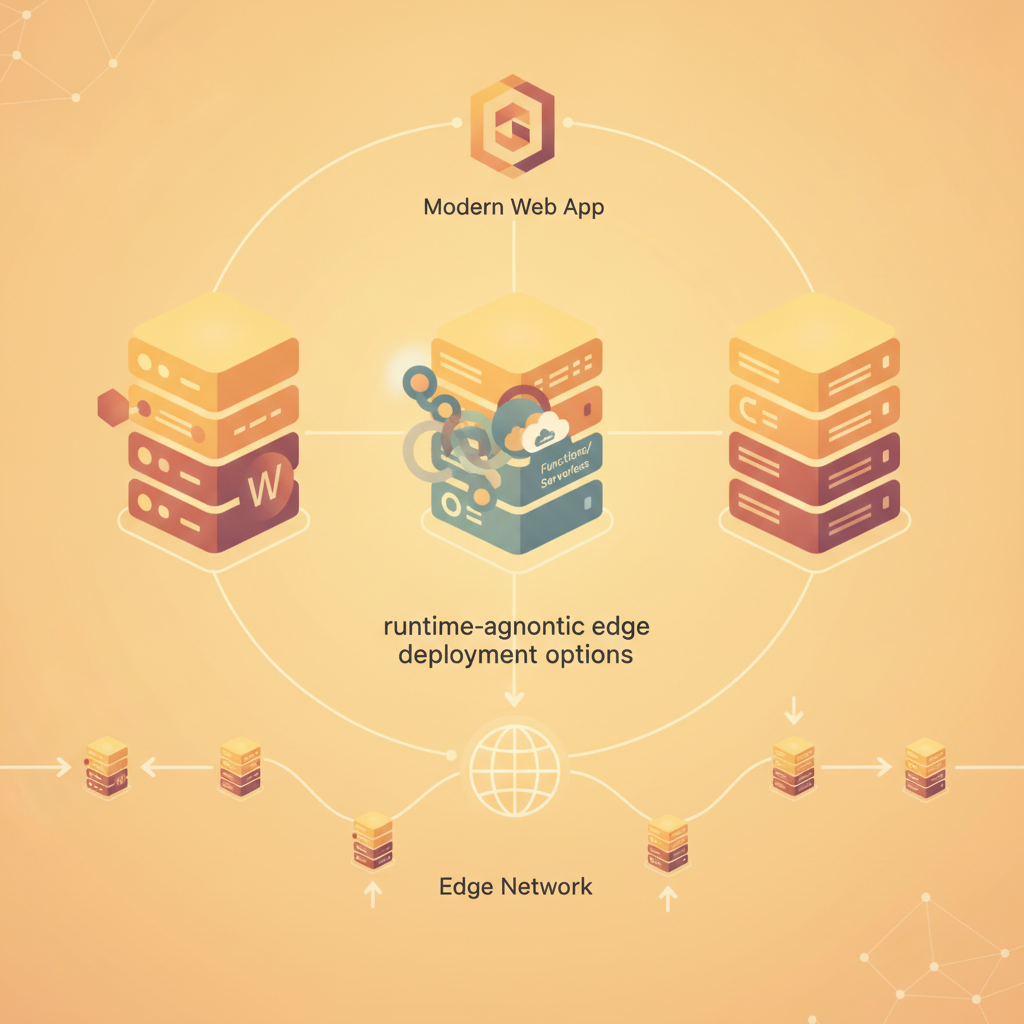 ## Resiliency and Progressive Enhancement A major differentiator for Remix is its commitment to web standards. Remix supports progressive enhancement out of the box, allowing HTML form submissions and basic navigation to function even if client-side JavaScript fails to load or hydrate [8]. This web-standards-first approach ensures that Remix-built SaaS applications remain resilient and accessible under poor network conditions [8]. Next.js is widely recommended by development agencies for AI-accelerated workflows because its mature ecosystem and extensive documentation maximize the effectiveness of AI coding assistants like Cursor and Claude [10]. For SaaS founders aiming to go from idea to production in weeks, the sheer volume of Next.js training data available to Large Language Models (LLMs) can significantly speed up development [10]. If you are looking to build a custom web app, you can get a quote to see how we can bring your SaaS idea to life. ## How to Choose the Right Framework for Your SaaS To choose the correct framework for your new SaaS, evaluate your project against these key criteria: - Assess your rendering needs: If your SaaS relies heavily on public-facing, SEO-optimized marketing pages alongside a private app dashboard, Next.js's hybrid SSG/ISR model is ideal [5]. If your app is entirely dynamic and requires real-time data updates, Remix's server-first SSR is built for this [5].
 - Calculate long-term migration costs: Migrating an enterprise application's data-fetching architecture from Next.js to Remix typically requires a minimum of 2 to 3 weeks for basic setups and up to 2 to 3 months for complex systems [9]. Choosing the wrong framework early in a SaaS lifecycle can lead to high refactoring costs down the road [9].
- Evaluate your talent pool: Next.js has a significantly larger hiring pool and ecosystem of npm packages [1]. If you plan to scale your engineering team quickly, Next.js offers a much wider selection of experienced developers [1].
- Determine your hosting preferences: Choose Remix if you want complete deployment freedom and want to run your SaaS on edge networks like Cloudflare Workers [6]. Choose Next.js if you prefer the streamlined, zero-config deployment pipeline of Vercel [6]. ## Framework Comparison Matrix | Feature | Next.js (15.2) | Remix (3.1) |
| :--- | :--- | :--- |
|---|---|---|
| Market Share [1] | 78% | 8% |
| Default Bundle Size [2] | 80 to 120KB | 60 to 90KB |
| Core Web Vitals (2026) [3] | Within 10 to 15ms of Remix | Within 10 to 15ms of Next.js |
| Data Fetching Pattern [4] | RSC and Server Actions | Unified Loader and Action |
| Routing Model [7] | Folder-based with optional layouts | Nested routing with data boundaries |
| Rendering Options [5] | Hybrid (SSR, SSG, ISR) | Server-first dynamic SSR |
| Deployment Target [6] | Optimized for Vercel | Runtime-agnostic (Node, Edge, Deno) |
Next.js is highly effective for SaaS platforms that require a mix of static marketing pages and dynamic dashboards because it supports hybrid rendering models like Static Site Generation (SSG) and Incremental Static Regeneration (ISR) [5]. Remix focuses primarily on a server-first, dynamic SSR approach, which is optimized for highly dynamic, real-time user flows rather than static pages [5]. ### Why is Remix's default bundle size smaller than Next.js?
Remix ships with smaller default JavaScript bundles of 60 to 90KB compared to Next.js's default of 80 to 120KB [2]. Remix achieves smaller client-side bundles by pushing data-fetching logic entirely to the server and relying on native browser APIs, whereas Next.js requires more careful optimization of Client versus Server Components [2]. ### Can I host Next.js outside of Vercel?
Yes, you can host Next.js on other platforms, but it is heavily optimized for Vercel's platform [6]. If you want a completely runtime-agnostic framework that deploys seamlessly to any JavaScript runtime, including Cloudflare Workers, Deno, and Node.js, Remix is often the preferred choice to avoid vendor lock-in [6]. ### How long does it take to migrate from Next.js to Remix?
Migrating an enterprise application's data-fetching architecture from Next.js to Remix typically requires a minimum of 2 to 3 weeks for basic setups [9]. For complex systems, the migration can take up to 2 to 3 months because the two frameworks use fundamentally different data-loading models [9]. ### Which framework is more popular for hiring React developers?
Next.js dominates the React meta-framework market with a 78% market share, while Remix holds steady at an 8% adoption rate according to the State of JS 2025 [1]. This massive market share difference means Next.js has a significantly larger hiring pool and ecosystem of npm packages, making it a safer default for many SaaS startups [1]. ### Does Remix support offline or low-connection resiliency?
Yes, Remix supports progressive enhancement out of the box, allowing HTML form submissions and basic navigation to function even if client-side JavaScript fails to load or hydrate [8]. This web-standards-first approach ensures that Remix-built SaaS applications remain resilient and accessible under poor network conditions [8]. ## Sources - [1] savibm.com: https://vertexaisearch.cloud.google.com/grounding-api-redirect/AUZIYQEzlT16i6lyqCk1dQvJXI7bU2jqXEzJ1p3vKkeJUFTkm_4F3s8SWF8w6-on-pra1PeaUGbE7azcuYJjua_d4OsZqYeclVh7qb6RG560mv0FVNuavDmbNa1oVpC5ez7kRmK1ky1WRV0=
- [2] webridge.co: https://vertexaisearch.cloud.google.com/grounding-api-redirect/AUZIYQFdj9usxLgcl3DhAfwCju_Q3Lj2R6PWXdsUxgZfSCObA5qMtTRN8OHoNJ1NFUX5vOigMBjhysgQGXcB1jUAHDL6MXy0eiXuuxAZxgFUqjMRyNoDAXubL8rQh4XwZf6QeSU=
- [3] webvitals.tools: https://vertexaisearch.cloud.google.com/grounding-api-redirect/AUZIYQF6zgASS-FU-u3jyEiRa5hCJJIWNXLy68Z6NA0MTTmYxVKwyUJEJnZm9Jz03Qvx1jbNAZRBMzWJzCNfi2EEXwbv5OeLPvLBN2jImpjf9j7QUU-R7NG4Ph3MSEUn0SLqjJPjRGgOv2-J4wq4Di5hjA==
- [4] coderfile.io: https://vertexaisearch.cloud.google.com/grounding-api-redirect/AUZIYQGjctm1k0XpP2WBPeZ4TtrAtnZnNd-YIG8ByA67G9muTkmfv7_q3HXkM4cmkhA0efLaqU_nK0LKD3KevlTt1jJYIgEJJZgWQ7iS6YDqCYeLhpY10D5b2_B6qfEGXJekWx3sJU4=
- [5] strapi.io: https://vertexaisearch.cloud.google.com/grounding-api-redirect/AUZIYQHoukee6qNiwluG_GEi3FWTKt2cKlBKumCPG9OwCKMSGQpyOEbxCXHwS9_PZatxM1YhxJ1r__b8bhFq9175O_t87_frFRvxoE0Xi3KbQRpIOqdEMnD7Y_Pjau7MNGfbxkMDLxx-lINr6RYxRn1o_7OUM1X1NJn3QMmvxwPRJvjm6SuhcfziWg==
- [6] medium.com: https://vertexaisearch.cloud.google.com/grounding-api-redirect/AUZIYQH0ZcCZSMRqHMvPPYSgsB1ig2V2x-y47VtQbdb_5YTVLOpHlKuaqI0FDe9hACLY3LniQTfNn5G-ET3-VNf5FNRiTqMmdDSjcIW3DaRq3G7TpduceRvE89CO1vL_Rd7bZgkQqZDTE3SSKk30GMYDDVI8uCMTyyurexEYZZopfu-z-rr7KtbSg_uqrKMO3oCurXiNROxzmULOiRYKNOMA5d6mP8uiH_8uAeveu0Tppw==
- [7] strapi.io: https://vertexaisearch.cloud.google.com/grounding-api-redirect/AUZIYQHoukee6qNiwluG_GEi3FWTKt2cKlBKumCPG9OwCKMSGQpyOEbxCXHwS9_PZatxM1YhxJ1r__b8bhFq9175O_t87_frFRvxoE0Xi3KbQRpIOqdEMnD7Y_Pjau7MNGfbxkMDLxx-lINr6RYxRn1o_7OUM1X1NJn3QMmvxwPRJvjm6SuhcfziWg==
- [8] mymindstudio.ai: https://vertexaisearch.cloud.google.com/grounding-api-redirect/AUZIYQHx1WJqTNk2Rkzyml413Vl_mrE9fdzJY8MXRHFwwoLwA6qr7EDFOeJ8pLFdNVrur4Oqu662ymm24zOK9hXNsEi6STveAyhFOESMw_pZkld8F-JYor5Y1rlIV3ZOL8Zym8vx1SV4G6_OzHM=
- [9] hygraph.com: https://vertexaisearch.cloud.google.com/grounding-api-redirect/AUZIYQHuQcYBpYpyLc56-_vpGA_i7GMVrwAc05qmHSZ22SQM4B5IFyCECo8GiRF9l_j3yUo9p4KD48y0su0m6wlLGKp09jwzU5WM2PThccj3CRIi_A4wWrKuxpDmVBbG
- [10] virtualoutcomes.io: https://vertexaisearch.cloud.google.com/grounding-api-redirect/AUZIYQFhtUCpWXC4FKOtOzkE7R9T3-UPm-J3QG-rfY3BfxSZG-28G7IEDZlmnXAZwCvzt3AcBTKXSc_rKXb4YDkVpw1zh08KblBQbGHJ6x_uf2Eapj6zcNMVGJnwuro2Ug-3qiME2F3yFpaaeA==
David Friedman — Founder & Lead Engineer, AppBrewers · LinkedIn
David Friedman founded AppBrewers to turn agentic AI into shipped software. He builds the infrastructure that automates app creation and deployment, so products go from idea to production in weeks, not months. He is also the builder of Conversify, an AI communication platform for service businesses. Based in Malta, serving clients across Europe, the US, and the UK.