
How to Scope a Multi-Tenant SaaS MVP Fast
Discover how to scope and build a multi-tenant SaaS MVP fast. Learn database benchmarking secrets, AWS cost optimizations, and key architectural choices grounded in engineering data.
Published on October 27, 2026 · Updated on October 27, 2026
Learning how to scope a multi-tenant SaaS MVP requires balancing launch speed with core architectural boundaries. A multi-tenant SaaS MVP is a software product that serves multiple customer organizations within a single shared application environment while keeping customer data strictly isolated. Standard multi-tenant B2B SaaS MVPs typically cost between $30,000 and $70,000 and take 5 to 12 weeks to deliver when built by experienced engineering teams [2]. To scope a multi-tenant SaaS MVP effectively without exhausting capital, founders must limit baseline features to primary user workflows, role-based access control (RBAC), Stripe subscription billing, administrative dashboards, and fundamental tenant isolation [2][7]. Deferring complex custom integrations and offline capabilities prevents premature runway burn, as running out of capital causes 70 percent of venture-backed startup failures due to over-scoping [7]. If you want to validate your idea rapidly with an experienced European development agency, you can get a quote from our AI-accelerated engineering team at AppBrewers to launch your platform in weeks. ## What Core Features Belong in a Multi-Tenant SaaS MVP Scope? When defining the initial release of a multi-tenant SaaS platform, scope creep is the biggest threat to survival. Data from CB Insights reveals that 70 percent of failed venture-backed startups run out of capital, with over-scoping non-essential features before validating market demand acting as a primary catalyst [7]. To maintain operational momentum and protect your runway, the baseline scope of a B2B SaaS MVP should strictly include: - Core Tenant Workspaces: Dedicated organizational environments where users within the same account collaborate [2].
- Role-Based Access Control (RBAC): Permission layers ensuring admins, team members, and guest users access appropriate resources [2].
- Stripe Subscription Billing: Automated tenant provisioning tied to tier-based payment plans [2].
- Administrative Dashboards: Super-admin controls for platform owners to monitor health, manage tenants, and process refunds [2].
- Fundamental Third-Party Integrations: Essential transactional communications like email or messaging services [2]. Advanced features such as custom white-labeling, native mobile builds, offline synchronization, and enterprise single sign-on (SSO) must be deferred until user demand is validated [7]. Check our related articles for more insights on managing MVP development pipelines. ## How Do Architecture Choices Impact SaaS MVP Costs and Timeline? Architectural choices made during the scoping phase dictate both immediate development expenditures and ongoing operating overhead. Building a shared multi-tenant SaaS architecture drastically reduces cloud infrastructure bills compared to multi-instance deployments. For example, migrating from a multi-instance architecture with 200 dedicated customer stacks to a shared multi-tenant architecture reduced monthly AWS infrastructure costs by 78 percent, dropping expenses from $45,000 down to $10,000 per month [1]. Shared application tiers running on auto-scaling compute and consolidated database clusters eliminate duplicate resource overhead while preserving security through token-based isolation [1].
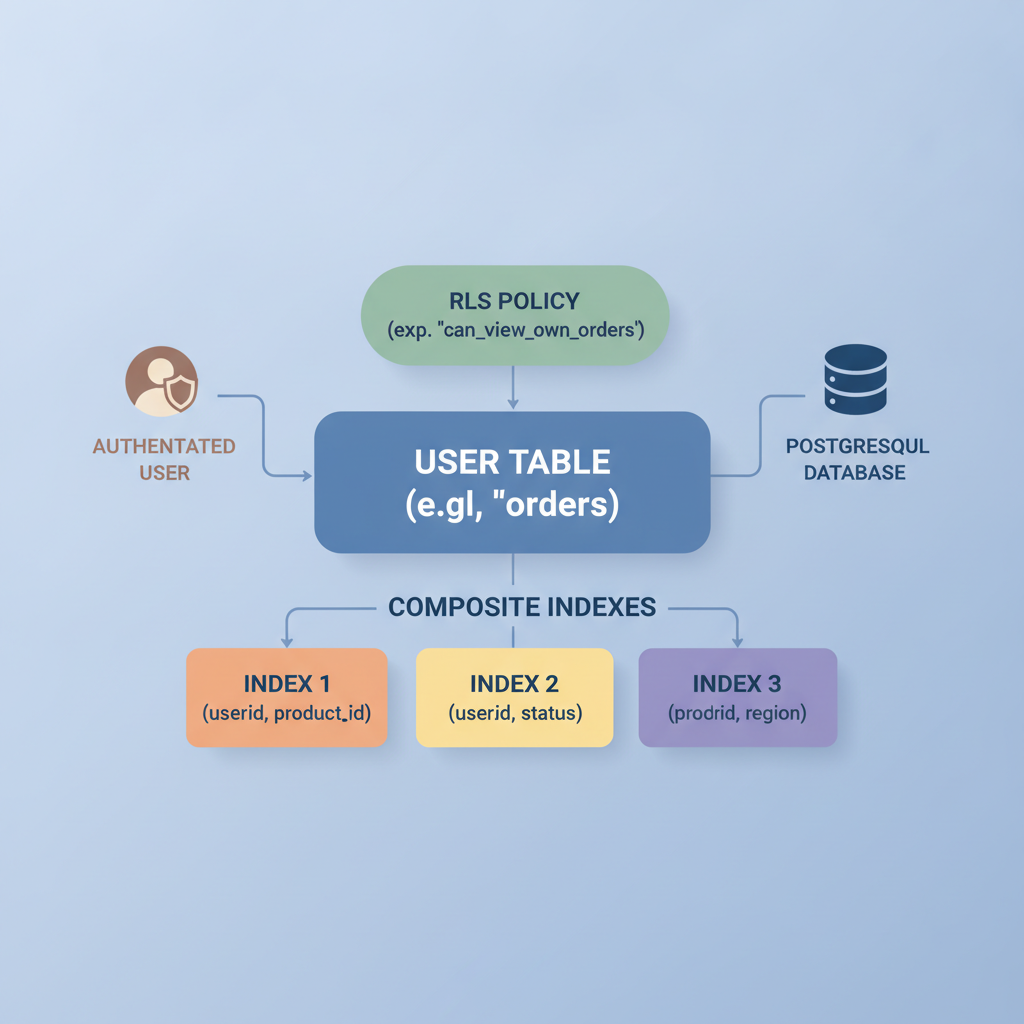
 ## How to Design a Multi-Tenant Database Architecture for Scale Database architecture decisions govern both security and application velocity as tenant counts expand. Engineers often debate between schema-per-tenant and pooled row-level isolation. Schema-per-tenant architectures work well initially, but encounter severe operational scaling bottlenecks once a SaaS platform exceeds 200 to 300 tenants [4]. At this threshold, running schema migrations, managing CI/CD pipelines, and handling automated database backups become prohibitively slow and fragile [4]. To maintain long-term scalability, engineering teams turn to pooled row-level isolation enforced by Row-Level Security (RLS). - PostgreSQL Row-Level Security Speed: Benchmark tests on PostgreSQL 17 with two million rows showed that standard RLS policies with proper indexing executed queries in 0.30 milliseconds for median tenants, matching the performance of manual tenant filtering [3].
- Composite Index Optimization: Multi-tenant database tables experience severe performance degradation beyond 500,000 rows unless composite indexes are explicitly created with the tenant identifier as the leading column in the format (tenant_id, target_column) [5]. Placing tenant_id first ensures the query planner performs fast targeted index scans rather than full table scans [5].
- Connection Pooling: Database connection limits, rather than CPU or memory capacity, represent the primary failure point as tenant counts grow [10]. Centralized proxies like PgBouncer or Amazon RDS Proxy are required to prevent connection exhaustion during concurrent traffic spikes [10].
 ## Step-by-Step Guide: How to Scope and Build Your SaaS MVP Following a systematic approach ensures your multi-tenant MVP hits the market on budget and on schedule. - Step 1: Map Primary User Workflows. Focus strictly on the single critical action a customer performs to achieve value in your application [7].
- Step 2: Establish Isolation Strategy. Choose pooled database isolation with token-based context handling early to avoid complex rewrites later [1][3].
- Step 3: Implement Cloud-Managed Compute. Use serverless compute innovations, such as AWS Lambda native tenant isolation mode, which executes function invocations in separate runtime environments per tenant without custom routing code [8].
- Step 4: Configure Subscription Tiers. Integrate Stripe for automated lifecycle management from signup to cancellation [2].
- Step 5: Enforce Database Guardrails. Set up composite indexing on (tenant_id, target_column) and install PgBouncer for connection management prior to public onboarding [5][10]. At About AppBrewers, our European development team utilizes agentic AI workflows to assemble production-grade multi-tenant architectures in weeks rather than months. ## How to Avoid Costly Architectural Rewrites as You Scale Winning enterprise deals often requires offering isolated hosting options. However, retrospectively re-architecting a pooled multi-tenant SaaS application to accommodate enterprise clients demanding dedicated single-tenant silos can require up to six months of developer effort if tenant boundaries were not planned from day one [6]. To avoid this friction, align your application architecture with the AWS Well-Architected SaaS Lens, which recommends a three-tiered isolation strategy [6][9]: - Shared Pool Tier: Low-cost pooled row-level enforcement ideal for basic self-serve or SMB tiers [9].
- Bridge Pattern Tier: Separate schemas or namespaces dedicated to mid-market accounts requiring partial isolation [9].
- Silo Tier: Fully dedicated AWS accounts or VPC instances designed for strict compliance and enterprise security [9][13]. Supporting tiered isolation patterns within a unified codebase allows your SaaS company to satisfy high-value enterprise requirements without maintaining fragmented codebases [9].
 ## Frequently Asked Questions ### How much does it cost to build a multi-tenant SaaS MVP?
Developing a multi-tenant SaaS MVP usually takes between 5 and 12 weeks for an experienced development team [2]. Timelines stay predictable when founders limit initial scope strictly to essential workflows and avoid premature enterprise features [7]. ### Is PostgreSQL Row-Level Security fast enough for multi-tenant SaaS?
Yes, benchmarks on PostgreSQL 17 with two million rows demonstrate that Row-Level Security (RLS) policies execute queries in 0.30 milliseconds for median tenants [3]. This matches manual filtering speed without performance penalties, provided policies avoid unindexed subqueries [3]. ### When should a SaaS application move away from schema-per-tenant architecture?
SaaS platforms encounter severe operational scaling bottlenecks with schema-per-tenant architectures once they exceed 200 to 300 tenants [4]. Transitioning to a pooled row-level isolation pattern eliminates prolonged schema migrations and CI/CD pipeline slowdowns [4]. ### How do you prevent multi-tenant database query performance degradation?
To prevent query degradation beyond 500,000 rows, composite indexes must be created with the tenant identifier as the leading column, formatted as (tenant_id, target_column) [5]. This allows the database query planner to perform targeted index scans instead of costly full table scans [5]. ### What is the best strategy for handling enterprise tenant isolation requests?
Following the AWS Well-Architected SaaS Lens, teams should implement a three-tiered isolation strategy: shared pool for SMBs, separate schemas for mid-market clients, and dedicated accounts or VPCs for enterprise tiers [9]. Planning this tiered pattern early prevents up to six months of developer rewrites later [6]. ### Why do database connections fail as multi-tenant SaaS platforms scale?
Database connection limits are the primary failure point during tenant expansion, as individual tenant connections quickly exhaust available pool limits [10]. Implementing centralized connection proxies like PgBouncer or Amazon RDS Proxy resolves this issue by managing concurrent spikes efficiently [10]. ## Sources [1] dev.to — https://vertexaisearch.cloud.google.com/grounding-api-redirect/AUZIYQH0puc769TYO0fedRU8w5DgGa-d7b3v0tP1WSyL1xQ7e-PNzJTpMU8TQycttHn5pI1x9qAd_mf9ZYNKXHvmCQHDJEDskIvBoMpvfiri3I_yHjAGzm7X6PLlDSOGg3ZsR0lTv2Ee6BlTNNuzuy6Cv9GZ-k7-vMrxDie5HOUGrx2zFxy4ILFrsL3ITuXnKNeng5AC7eq5yax9l6N3n5sR84BYN8n8qo6IS8HkIzhS7bq6-sGsTw==
- coheser.com — https://vertexaisearch.cloud.google.com/grounding-api-redirect/AUZIYQFh940hdceZSH0fvx7OGQV-xMRYMoXsRobAnWEUCnIMd0SOCcS09CjBXqilQePwyIh78x8FmYDfY0X1BfkskEdoyxfFAQeQsURUfJUBDfmPF1DDdBHbPx9Vk68QafwqoFRENxWzjdG11O9XrUo5
- 52s-solutions.com — https://vertexaisearch.cloud.google.com/grounding-api-redirect/AUZIYQFFKTZYBAP1h97j4I7gZuo8e5CZjbe157DO2BTlBxqjaddcvcn1jPAjfc2E_64Nt022P6Vmbaj8QEO3FBoYQ9KdhUtXtb1x9jZOVNXUiijVjded_49GGrzrPys0iBjb05bWJs6gClVpt6tvxukXb5lLC0w=
- now-next.nl — https://vertexaisearch.cloud.google.com/grounding-api-redirect/AUZIYQEZgW3IAJw2Ht5nLRpkDVQc3-TbMaQ0A1qQj7qS4Q5Zd7jBfh1t85wKTpJtEe8zPiHm5aRwt0-HymGi4a-Vdb4E-5Mj8BogqF_X6z_OU3NFQf8DfazGOzuXX1N1OdJMjQYdMxQDRruNI-bl5PdbWKd9p3hoOQ8stoHC-RWn6T6axw==
- dev.to — https://vertexaisearch.cloud.google.com/grounding-api-redirect/AUZIYQHnoVOaewYCqVPc31Rq3HSDOnGQDQS3DuWRALA3ZEdOhXBRESVyzphPq27F-7fgjkooH2yj_DdkSo8I5FbkAG2w57zqGXJj2zwQXPyu3zeMFgPwfCyntz8rVDlnltEqBOt8eQplGLohm4BGk5uFMGGE2Sn08H2p77Vfuj5f42-ZEpQn7os2Uk3AXF0akLO-9pDKXg==
- zyptr.com — https://vertexaisearch.cloud.google.com/grounding-api-redirect/AUZIYQFZ71JljXh9HZ1cMDuvLkwWZpABIXLrcMF99K1x2iK1TU1t9kZ_MPL8TTWD2sznBzG4AgcLKMQ1eEH39gE1alM35VH_Gg6RzcsrYIW8BbDWdmOeFcnvgjb53zwe5b0b-j1_2_VpMS6e_dRD7axiZCAYvhL7p79xhPJp
- medium.com — https://vertexaisearch.cloud.google.com/grounding-api-redirect/AUZIYQHL06s1OjQS3byBda60VmVsd7GC8kQIvEhktnzyhNL-82rghbmOIzNcB5vO3Nks0IEkDyUbGpXqBZzYjq8bxsefPhWxKldnf_-IhGza9e5ztsS9hFyavJCujL2uavhvSdAq8qgaudty34eSzWF6lyTHt_dJyASUb4xNskAyg2rTg3Yh7I5x4t5uu2TH_AGYyw50WHarVII=
- techpuvi.com — https://vertexaisearch.cloud.google.com/grounding-api-redirect/AUZIYQHywje4VuDSDvgJEY_4XPoEJuNSTbB0ecGI6fp50D-JINTHmDbXc_0h86oJMi60GZTM4_CA0Iw_ZrURbg8sG6oCmZSoxLiPSn2PrwM3iqvnPzxhF9B-Y6RIZuFxnohca1_L29Pl7_kex3lw8SrrHIrVDXBOntpUKuw=
- amazon.com — https://vertexaisearch.cloud.google.com/grounding-api-redirect/AUZIYQEyTEpwwBI07RBkeg4MVKQQlDq7npKrDCNx7_RkNOHg2O9Op_y0Vawi1WYjHk6XG6k88HUBrctOAeWRdZ__q1mxWH9OotPJhnfFqYAPU7fVODUH2U8ygFkS9uZM12827IMmOjRASHIVjytl9eAQETAgAeuZCKZOdWe6Hug=
- amazon.com — https://vertexaisearch.cloud.google.com/grounding-api-redirect/AUZIYQHa_VxyPc4TKkbtGpXVTZMpmpuvsmiJt0FLSNOUQoqHsIuAKTkpFD8gNP3PeE9CJwhZEnV_XFv6LFZbGLFGgzYa6xbGALO4Qh_XWwc-powWXNs_kx3h_QJBCm2BVz8fkCTZRgQxm4Gm6EiONnF3v5bpDwdT0NDwn0xWu_B0
- amazon.com — https://vertexaisearch.cloud.google.com/grounding-api-redirect/AUZIYQFe5OQsPOl9QurcdpHlF9vUHcD0DHSFaa8no9qy51Z9f0dstVHgD58ombh4YWJHIfGVUyo2VUb-oCdjIRSkIwolR5r_N2wICiGWT0eZj9YZb95GaS_LGHPfriIGOvUabNM8ZKXQCrGpQ_DXXO4v8rR2QWVpcbBv6nSCRgDIgoMTDBqUviV9AipAUvctVVz1LrIL2GeO4yUlmYKLXODuDvZVgzX_OZy3dht0xqkmI3k= Building a multi-tenant SaaS MVP fast relies on strictly defining baseline capabilities, leveraging shared database isolation, and maintaining scalable indexing routines.
David Friedman — Founder & Lead Engineer, AppBrewers · LinkedIn
David Friedman founded AppBrewers to turn agentic AI into shipped software. He builds the infrastructure that automates app creation and deployment, so products go from idea to production in weeks, not months. He is also the builder of Conversify, an AI communication platform for service businesses. Based in Malta, serving clients across Europe, the US, and the UK.