
How to Choose a Web App Tech Stack: 2025 Guide
Selecting the right web app tech stack depends on your project goals, team skillset, and performance requirements. This guide uses 2024 industry benchmarks on React, Next.js, Node.js, and PostgreSQL to help you build a modern application.
Published on October 29, 2026 · Updated on October 29, 2026
Choosing a web app tech stack involves selecting the combination of programming languages, frameworks, databases, and infrastructure tools that power your application. According to industry data, JavaScript remains the most widely used programming language at 62.3% adoption, with Node.js leading backend web technologies at 40.8% developer usage [1]. Selecting the right architecture balances frontend interactivity with backend reliability to lower maintenance costs and reduce time to market.
A modern web application stack typically pairs a component-based frontend framework like React, which holds a 39.5% usage rate [1], with an enterprise relational database such as PostgreSQL [2]. Engineering teams increasingly write code using TypeScript to catch runtime errors before production, leveraging its 2.63 million active monthly GitHub contributors for library support [4]. Furthermore, incorporating AI-accelerated workflows enables engineering teams to complete complex coding tasks 55.8% faster [5]. If you need tailored guidance on your technical setup, you can learn more About AppBrewers and our AI-assisted development approach.
Selecting software tools requires evaluating business goals, team expertise, and expected application traffic. The following sections outline the essential decision criteria for modern web stack selection.
What Is a Web Application Tech Stack?
A web application tech stack consists of two primary operational sides: the frontend (client-side) and the backend (server-side). The frontend encompasses everything users see on their screen, while the backend handles business logic, authentication, and database operations.
Modern architectures frequently implement single-page application patterns or server-side rendering strategies. Research shows that 90% of web developers build Single-Page Applications (SPAs) while 59% deploy Server-Side Rendering (SSR) patterns in production environments [3]. SPAs offer fluid, desktop-like user experiences for logged-in user dashboards, whereas SSR delivers fast initial page loads and high search engine visibility for public-facing marketing pages.
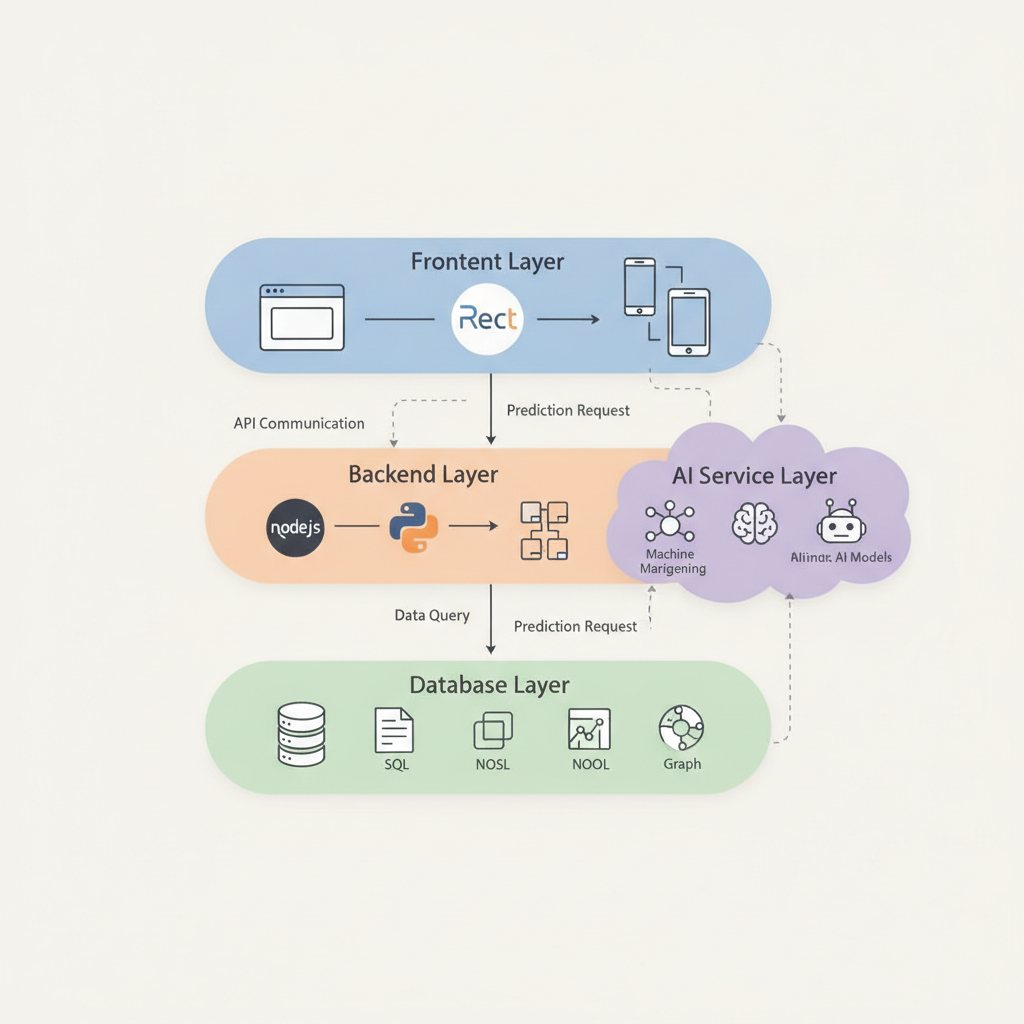
Comparing Popular Tech Stack Frameworks
Choosing between popular frameworks depends heavily on performance needs, ecosystem support, and team scaling requirements.
Frontend: React, Next.js, and Svelte
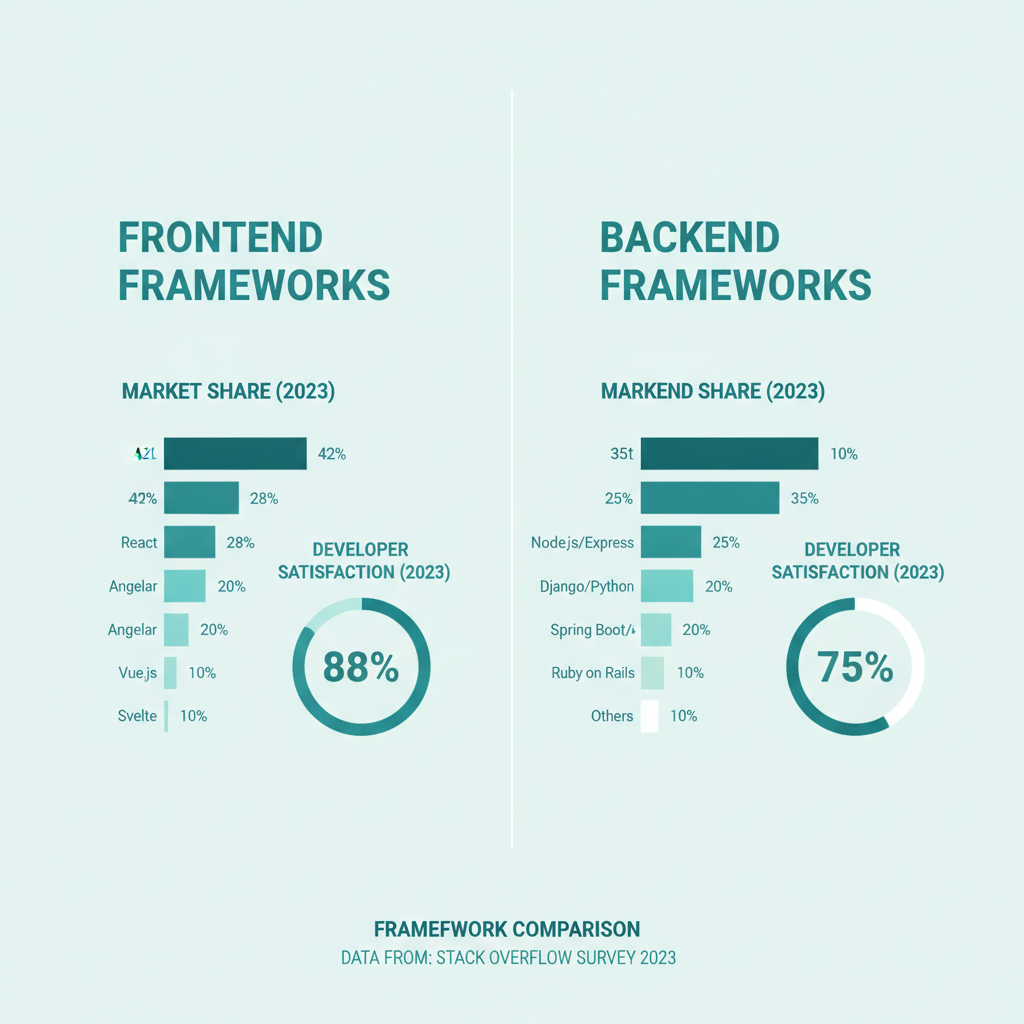
React remains the dominant baseline for interactive user interfaces, commanding over 44% market share across all frontend web work and a 39.5% usage rate among developers [1]. Its extensive ecosystem makes finding pre-built components and hiring developers straightforward.
Next.js builds directly on React by adding native server-side rendering, file-based routing, and image optimization. Over 68% of JavaScript developers report using Next.js [3], while general developer surveys record Next.js at 17.9% overall adoption [1]. It is the premier choice for public SaaS platforms where search performance and web vitals are critical.
For projects prioritizing minimal bundle size, Svelte offers an compelling alternative. Svelte achieved a 72.8% admiration score among software developers, making it the highest-rated frontend framework for developer satisfaction [1].
| Framework | Key Advantage | Adoption / Satisfaction Rate | Primary Use Case |
|---|---|---|---|
| React | Massive ecosystem and talent pool | 39.5% usage [1] | Complex user dashboards and SPAs |
| Next.js | Native SSR and search engine optimization | 68% among JS devs [3] | Public web applications and marketing SaaS |
| Svelte | Lightweight bundle size and high performance | 72.8% admiration score [1] | Content-heavy apps needing lean client assets |
Backend: Node.js vs Python
On the server side, Node.js leads web technologies with 40.8% developer usage [1]. Sharing JavaScript or TypeScript across both frontend and backend layers allows teams to reuse data models and reduce context switching.
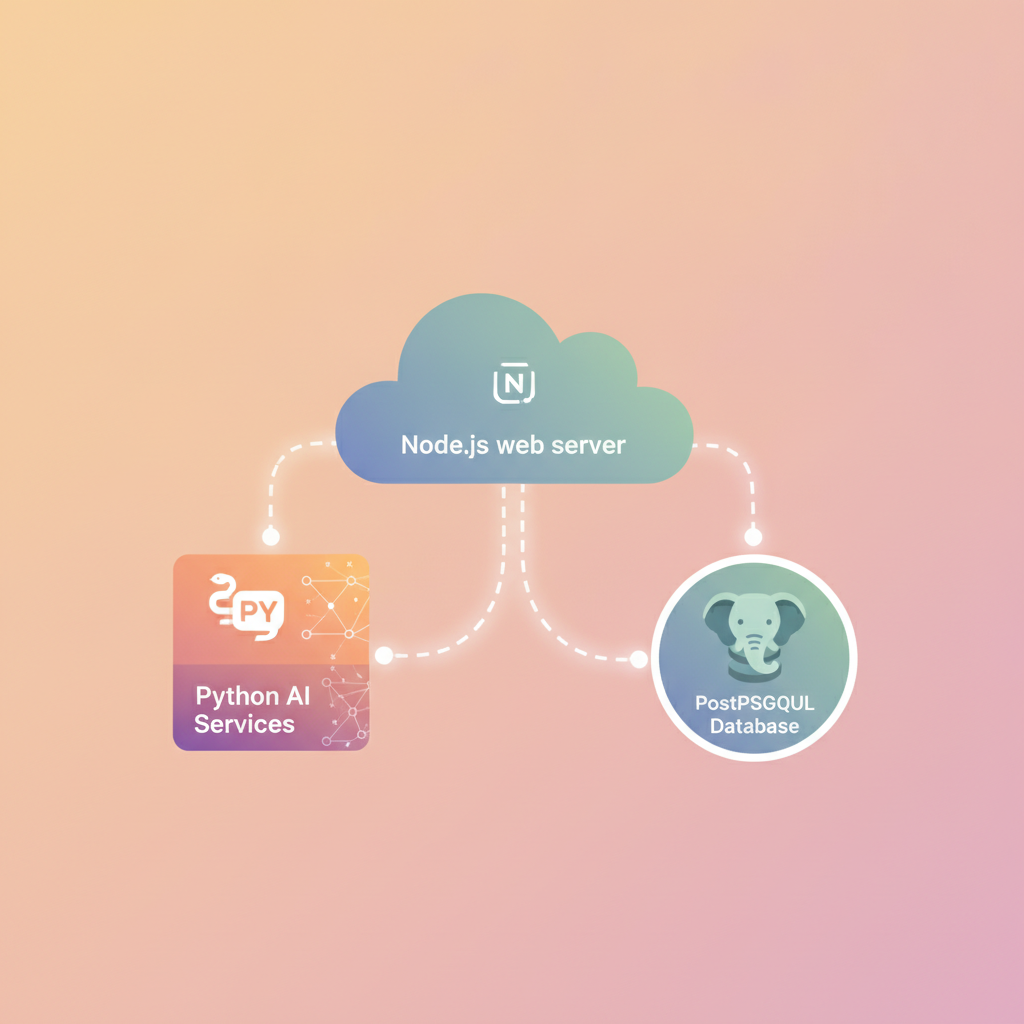
Python, however, overtook JavaScript as the top language on GitHub in recent developer reports [9]. Python is uniquely suited for web applications that incorporate machine learning models or autonomous AI agents. For example, Python achieves a 52.2% resolution rate in autonomous AI agent coding benchmarks like Multi-SWE-bench [13]. Pairing a Node.js web server with Python AI microservices offers an effective balance of API performance and intelligence.
Database: PostgreSQL for Scalable Applications
PostgreSQL has established itself as the leading database technology among developers following steady growth from its 33% baseline in 2018 [2]. As an enterprise-grade relational database, PostgreSQL provides structural robustness, strict SQL compliance, and schema flexibility required for multi-tenant SaaS products and high-volume business databases.
How to Select the Right Tech Stack
Follow these practical steps to determine the optimal technical stack for your web app:
- Step 1: Define performance and search visibility requirements. Choose Next.js for server-rendered web pages that need fast Google indexing, or standard React for internal administrative tools.
- Step 2: Establish strict type safety across your codebase. Adopting TypeScript reduces runtime exceptions and improves team velocity as software codebases scale up [4].
- Step 3: Evaluate ecosystem talent and build speed. Choosing JavaScript and Node.js grants access to the software industry's largest collection of libraries and engineering talent [1].
- Step 4: Plan for AI automation and microservices. Utilize Python services when your web application requires embedded machine learning pipelines or AI agent workflows [9], [13].
- Step 5: Incorporate AI-accelerated development practices. Industry studies show developers using AI coding assistants complete software tasks 55.8% faster [5]. Additionally, 76% of developers currently use or plan to use AI tools [1], with 81% identifying increased productivity as the main benefit [15].
If you want to accelerate your product timeline from idea to production, you can get a quote for our AI-accelerated full-stack development services.
Why Modern Stacks Combine Node.js and Python for AI
Modern application development increasingly relies on modular architectures. Instead of forcing a single language to handle all tasks, high-performing software teams separate client-facing APIs from data-heavy workloads.
Building your primary web backend in Node.js with TypeScript ensures fast execution of asynchronous user requests and real-time socket connections. Meanwhile, offloading heavy processing or agentic AI infrastructure to Python services allows you to capitalize on Python's dominance in machine learning libraries and AI task resolution [9], [13].
Frequently Asked Questions
What is the most popular tech stack for web development?
JavaScript paired with Node.js is the most popular foundation, used by 62.3% and 40.8% of developers respectively [1]. React serves as the standard frontend library with a 39.5% usage rate, frequently combined with PostgreSQL for database management [1], [2].Should I use React or Next.js for my web app?
Use Next.js if your application requires server-side rendering, initial page load speed, and search engine optimization for public pages [3]. Choose standalone React if you are building a private, logged-in application dashboard where search engines do not need to index the content [1].Why is TypeScript recommended for modern web applications?
TypeScript adds strict static typing to JavaScript, catching runtime errors during compilation rather than in production [4]. With 2.63 million monthly active contributors on GitHub, it provides reliable tooling and auto-completion across complex codebases [4].How does AI speed up custom web app development?
Controlled empirical research shows developers using AI coding tools complete software tasks 55.8% faster than those working manually [5]. Integrating AI automates repetitive boilerplate code, allowing engineering teams to ship features in weeks instead of months [5], [15].When should I choose Python over Node.js for backend services?
Choose Python when your application relies heavily on data science, machine learning models, or agentic AI workflows [9], [13]. Node.js remains preferred for high-throughput, real-time web APIs due to its non-blocking event loop [1].Which database is best for multi-tenant SaaS platforms?
PostgreSQL is the leading database choice for software developers due to its long-term reliability and strict SQL compliance [2]. It handles complex relational schemas, data partitioning, and scaling requirements needed by enterprise SaaS applications [2].Related Articles
Explore our related articles to learn more about custom SaaS development, mobile app architectures, and AI automation strategies for growing businesses.Selecting the right web app tech stack requires balancing proven developer tools with modern AI performance acceleration. By combining TypeScript, Next.js, Node.js, and PostgreSQL, startups and enterprise businesses establish a scalable foundation that minimizes technical debt and maximizes release speed.
Sources
- [1] stackoverflow.co — https://vertexaisearch.cloud.google.com/grounding-api-redirect/AUZIYQKemdtj_L1XqxLv2pqp9dElQaUZ5PfcP8n6Uzta98sSrC-RRTM4EaeW0TmviFvRsKzWiLYyK9w_lvxK3d-J59glnlk4gLm52BkBFYIrJ2DybmF9D3FkJpY4hftQTXUQm76q1I-
- [2] stackoverflow.co — https://vertexaisearch.cloud.google.com/grounding-api-redirect/AUZIYQE2UskPERW1YZQl4La0sUtd2IMKZolBqd7l7zE0DDBguibthb2EQ-1pawdVlZIg5-OSAYnOhg25esBfWuYllhBeXWRM4Jlvy-CDQkBKSXJidGgvzqSFX85acRE=
- [3] oliverwanghansen.com — https://vertexaisearch.cloud.google.com/grounding-api-redirect/AUZIYQGD9rcWyYE0B9Ho0TlqVBAu2hCwXPOli7l7YESg71q0lpj4ZtHtO823xzRaij7PiEQBSR8b23QTXTJh-CohkVXnAXi3McJngbmD2fMPyzyEFqWfOqL_ZKUkEefcETLGAqLGwvlqR8BMWHKTV8GyopE_LvB5rzXTzqBsZL4H7UGpqI5_A_pPD_nFJ61gPT-mj_dwtZFlgv6j
- [4] github.com — https://vertexaisearch.cloud.google.com/grounding-api-redirect/AUZIYQGiyISTrGMpvTXPpu9F1lb8oNwXwBoE3plr2211zG0iFv_BCrbjwZUOpNeWtnO4wnUl_-74ixdPWswAuZD7HphYP0MwtsGkxND1ufsaPX6qPK75ScGBqDnP9Ksx6faWcN7472jvmMLvbKKwSaUFbCTgq-SuNpG1
- [5] medium.com — https://vertexaisearch.cloud.google.com/grounding-api-redirect/AUZIYQF2eiIS1YHThDGKqJ19apoplZb3MCRDLs1QeRBvbiQhdQfiPP_RX3--XYkbfWh9kcOO43nkPeumhPjMwll1OSyGSaZ-K4CqBN1_esYHlH3q6shCSnN2R4E66xkJC96erBar8D6mUbnepVpw6Sea7iKfELA8qy_loQ75EEZFM47Fp7BGy8fG4iC_ixpK6rXJzOv1J7tBR0yOD3I=
- [9] github.blog — https://vertexaisearch.cloud.google.com/grounding-api-redirect/AUZIYQH1ZZhaaE1jrno4W0p3AmsyoUUH3Hr812owcgs3LE2BHA0kqa23DqQ1cMifHOSTWy5BBvrYVUrXOxB1ay9pKYhTwJCMG8JFVAJQQ9fae04TyD9SyEMyQT-FRuAGCNCO0Ye52Q6nm5zpwDjjOesAADkx
- [13] alphaxiv.org — https://vertexaisearch.cloud.google.com/grounding-api-redirect/AUZIYQExX0vzJasMlRuaKlTH79uqW4ah1X9_wBIRHPQ71bLCtrcWkSX51YjplJC6US6DBauXsxQr2ZH43vt_OISgCAIKXg1t_65sB-dtOdWGO2DinHgqAkys6HhWdbB1mA==
- [15] stackoverflow.co — https://vertexaisearch.cloud.google.com/grounding-api-redirect/AUZIYQE0zbO5t7lmohaKMFSJPKWt3Hz1VHunYRQY_tBgcUDskujqCrJ5hkFL0Hn4Fkz8904qn7FZu_-800Fx0nTLULXSfvMUPBnvQA4bzoW9zPWz4vkTC5cenKPEK58Alg==
David Friedman — Founder & Lead Engineer, AppBrewers · LinkedIn
David Friedman founded AppBrewers to turn agentic AI into shipped software. He builds the infrastructure that automates app creation and deployment, so products go from idea to production in weeks, not months. He is also the builder of Conversify, an AI communication platform for service businesses. Based in Malta, serving clients across Europe, the US, and the UK.